The category explainer
Proprietary Blends Explained, With Jellyfil as the Example
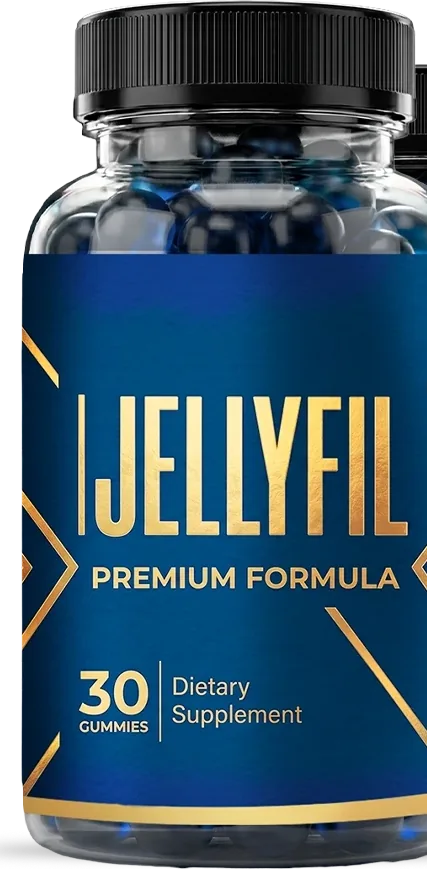
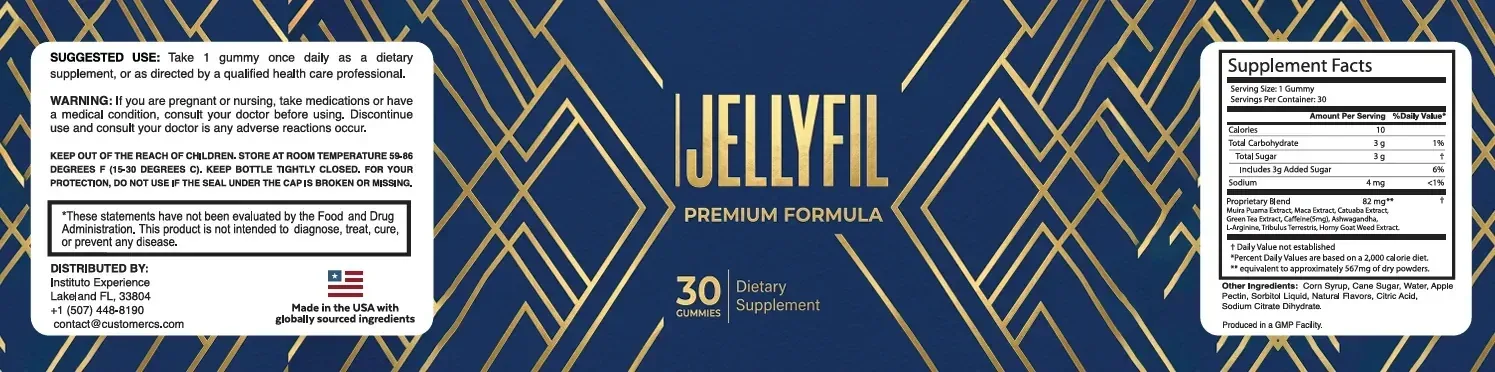
A proprietary blend is declared as one combined weight, with its ingredients named in descending order by weight and no figure for each one, which the FDA labeling rules allow. On this panel that means 82 mg shared by nine ingredients, described as equivalent to approximately 567 mg of dry powders, with only the caffeine broken out at 5 mg. The blend total is a ceiling, not a dose.
What is a proprietary blend?
A proprietary blend is a group of ingredients that a manufacturer declares on the Supplement Facts panel as a single line with a single combined weight, rather than giving a figure for each ingredient. The ingredients themselves still have to be named.
You have seen them without noticing. Anything on a panel that reads as a name followed by one milligram figure, with a list of plants underneath and no numbers beside them, is a proprietary blend. Pre-workouts, sleep formulas, greens powders and most of this aisle are built that way.
- Blend total82 mgOne figure covering all nine
- Ingredients sharing it9Printed in descending order
- Amounts published1Caffeine, at 5 mg
- Dry-powder equivalence567 mgThe label's own fairer figure
The tiles above come from one real panel, the one on this product, and they show the shape of the problem in four numbers. Nine ingredients, one weight, one published amount.
Why are labels allowed to print only the total?
Because the labeling rules permit it. Where a dietary supplement contains a proprietary blend, the label may declare the total weight of the blend and list the ingredients it contains in descending order of predominance by weight, without a separate quantity for each one (FDA dietary supplement labeling guide).
So two obligations survive and one disappears. Every ingredient must still be named, and the order must still run heaviest to lightest. The per-ingredient amount is the part that goes.
That descending order is the most underused information on a panel. On this label the sequence runs:
- 1. Muira Puama Extract
- 2. Maca Extract
- 3. Catuaba Extract
- 4. Green Tea Extract
- 5. Caffeine (5 mg)
- 6. Ashwagandha
- 7. L-Arginine
- 8. Tribulus Terrestris
- 9. Horny Goat Weed Extract
Read that as a ranking and it tells you something real: there is more muira puama extract in the gummy than horny goat weed extract, and more maca than tribulus. Read it as a recipe and it tells you nothing, because a ranking has no scale. The heaviest of the nine could be most of the blend or a modest slice of it, and the label does not say which.
What does the dry-powder equivalence line mean?
This panel carries a footnote reading, in the label's own words, equivalent to approximately 567 mg of dry powders. It is a claim about concentration: that the extracts used stand in for roughly 567 mg of raw dried plant material.
It is a reasonable thing to print, and it is the fairer of the two numbers, so it deserves quoting whenever the 82 mg is. An extract is concentrated, and judging it purely by its finished weight understates it.
It has three limits. The word approximately is doing real work and has no defined tolerance. No extract ratio is printed for any of the eight plant ingredients, so nothing shows how 82 mg became 567 mg. And 567 mg split nine ways is still a small quantity of each plant.
How do you compare a blend with a study?
Usually you cannot, and finding that out quickly is the point of the exercise. Research reports amounts, blends do not publish them, so the two sides never meet.
There is one way through, and it works when a blend contains an ingredient with well-documented human research. L-arginine is that ingredient here. NIH's Office of Dietary Supplements notes doses of 2 to 20 grams a day in the performance research (NIH ODS). A review of ingredients common in this category called L-arginine the only one with reproducible human results (Srivatsav and colleagues, 2020).
Now do the arithmetic. Two grams is 2,000 mg. The entire blend on this panel weighs 82 mg, and L-arginine is seventh of nine in the printed order, so it is lighter than six other ingredients in there. Even if you generously use the label's 567 mg dry-powder figure for the whole blend, the total is still under a third of the smallest studied amount, before it is divided nine ways.
That one comparison settles the scale question for the whole blend, using two printed numbers and one linked source. No invented figure is needed, and none should be accepted from anybody.
How should you read a blend total honestly?
Six steps, in order. They take about three minutes with a bottle in your hand, and they work on any panel in this aisle rather than only this one.
Find the blend total
That figure is a hard ceiling. Here it is 82 mg, so nothing inside it can weigh more than that, and eight of the nine must weigh less.
Count the names underneath
Nine names sharing one number means a small average share before the order is even considered. Two names sharing it would be a different product.
Read the order as ranking, not quantity
First is heaviest, last is lightest. Nothing says whether the gap is a factor of two or two hundred.
Use anything broken out separately
A figure beside a single ingredient, like the 5 mg of caffeine, is real information. Do not spread it across the others.
Check the scale against one researched ingredient
Find the ingredient with the strongest published evidence and the amount that research used. If the blend total is smaller than that, the question is answered for the whole blend at once.
Write down what is still unknown
Extract ratios, standardization, plant parts and species usually stay unpublished, and those blanks are part of what you are buying.
| What the label prints | What it is allowed to mean | What it cannot be read as meaning |
|---|---|---|
| Proprietary Blend | A mixture the maker treats as its own recipe, declared as one line. | A standard, a grade, or anything a third party has checked. |
| 82 mg | The combined weight of everything inside the blend in one serving. | The weight of any single ingredient inside it. |
| A list underneath, with no numbers | Every ingredient in the blend, in descending order of weight. | An equal split, or any hint of the gaps between them. |
| Caffeine (5 mg) | One ingredient broken out voluntarily with its own figure. | Permission to assume the other eight are near 5 mg. |
| Daily Value not established | No official daily intake figure exists for this mixture. | A judgment that the amount is adequate or inadequate. |
| Equivalent to approximately 567 mg of dry powders | A claim that the concentrated extracts stand in for roughly that weight of raw dried plant material. | That 567 mg of anything is in the gummy, or that the ratio is documented. |
Are proprietary blends a bad thing?
Not automatically. They are legal, common, and there is a real commercial reason for them. What they are is a trade, made with your information rather than the maker's.
- It lets a maker keep a recipe from being copied line for line by a competitor.
- It is legal, ordinary and used across the whole supplement industry.
- It still forces every ingredient to be named, so nothing is hidden entirely.
- It still forces descending order, which carries more information than most shoppers use.
- You cannot compare the product with any published study, because studies report amounts.
- You cannot compare two competing bottles, even when both name the same plants.
- A pharmacist cannot judge an interaction properly without an amount.
- An ingredient can be present in a token quantity purely so its name can appear on the list.
The fair conclusion is narrow. A blend does not prove a product is weak, and a full panel does not prove one is strong. What a blend removes is your ability to check either way. If you wanted a measured amount of one ingredient, a single-ingredient product will always tell you more.
For this label specifically, the panel page types the whole thing out, the ingredients page takes the nine names in turn, and the post on what 82 mg buys you sets the blend beside the 3 g of added sugar printed two lines above it.
Proprietary blends: common questions
Is a proprietary blend legal?
Yes. The labeling rules allow a supplement to declare the total weight of a blend and list its ingredients in descending order by weight, without a figure for each one.
Does descending order tell me the amounts?
No. It tells you the ranking only. First is heaviest and last is lightest, and nothing on the label shows how large the gaps are.
How much L-arginine is in an 82 mg blend?
Not published, and nobody can work it out from the label. It is seventh of nine in the printed order, so six ingredients outweigh it, and the whole blend is 82 mg.
What does equivalent to approximately 567 mg of dry powders mean?
It is the label's statement that the concentrated extracts stand in for roughly 567 mg of raw dried plant material. It is the fairer figure to quote, and it still carries no extract ratio for any ingredient.
Why is the caffeine given a number when nothing else is?
A maker may break out an individual ingredient voluntarily, and caffeine is the one broken out here at 5 mg. It does not imply anything about the other eight.
Can I ask the seller for the amounts?
You can ask, on +1 (507) 448-8190. A maker is not obliged to give them, and an answer given on the phone is not the same as a figure printed on a panel.
Sources for this page
- U.S. Food and Drug Administration. Dietary Supplement Labeling Guide: Chapter IV. Nutrition Labeling. Source
- NIH Office of Dietary Supplements. Dietary Supplements for Exercise and Athletic Performance: Fact Sheet for Health Professionals. Source
- Srivatsav A, Balasubramanian A, Pathak UI, et al. Efficacy and Safety of Common Ingredients in Aphrodisiacs Used for Erectile Dysfunction: A Review. Sexual Medicine Reviews, 2020. Source
- U.S. Food and Drug Administration. Dietary Supplements. Source
Keep reading
Ready when you are
Order Jellyfil from the U.S. retail desk
One gummy a day. Follow the label on your bottle. 60-day money-back guarantee. A real person at +1 (507) 448-8190 for orders, tracking and refunds.