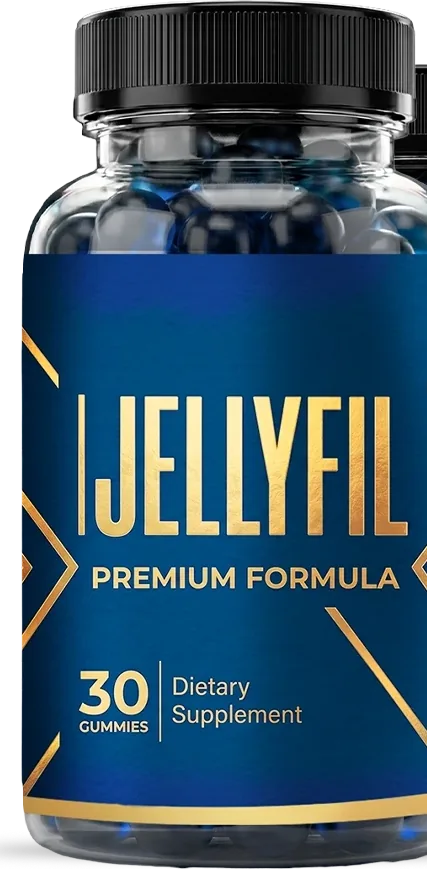
Twelve seals, one printed panel
Jellyfil Testing and Quality: What the Seals Do and Do Not Prove
No certificate of analysis or third-party lab result was supplied for Jellyfil, so none is shown here. Of the twelve seals on the listing, the vegetarian seal does best, because the gummy is set with apple pectin and no gelatin. The 100% natural seal does not, because the panel lists corn syrup, cane sugar and sorbitol liquid. FDA-registered means a factory listing, not approval.
What testing has been published for Jellyfil?
None. No certificate of analysis, no third-party laboratory report and no study of the finished gummy was supplied with this product, so this page cannot show you one.
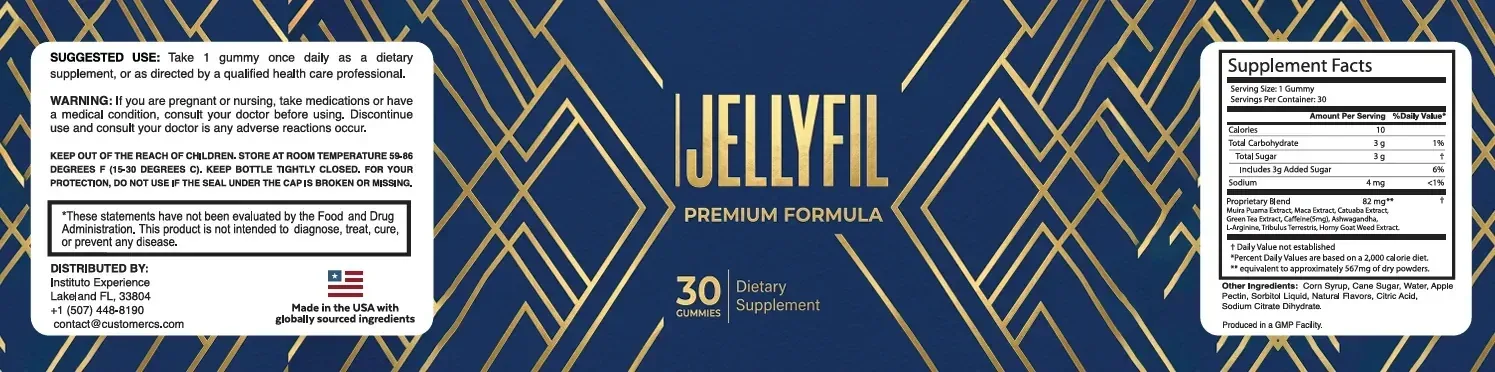
That is the honest starting point, and it is not unusual in this aisle. What can be checked is the printed label, and what can be read against it is the row of twelve seals on the sales listing. Some describe real things, one is contradicted by the panel, and one is partly supported by it.
Start here
Seals are artwork until something backs them
A seal is a picture a brand chooses to put on a page. It is not a certificate, it carries no number you can look up, and nothing stops a supplement listing from showing several at once.
The way to read them is one at a time, against the printed panel. That is what the table below does. It is also why the Supplement Facts page types the panel out in full: the panel is the only document here that has to be accurate by law.
The twelve Jellyfil seals, read against the label
Each row takes one seal and asks what the bottle says about it. Two rows matter more than the rest, and they point in opposite directions.
| Seal on the listing | What it can support | What the printed label actually says | Verdict |
|---|---|---|---|
| FDA-registered facility | A plant appears on an FDA register of facilities | Nothing. The label's only manufacturing line is produced in a GMP facility | A factory listing, not approval of anything |
| GMP | Good manufacturing practice is claimed for the plant | Produced in a GMP facility | Claimed, with no audit, certifying body or date shown |
| Manufactured in USA | US production | Made in the USA with globally sourced ingredients | The label's own wording is narrower than the seal |
| 100% natural ingredients | A brand claim about the recipe | Corn syrup, cane sugar, sorbitol liquid, citric acid, sodium citrate dihydrate | Not supported by the panel |
| Vegetarian | No animal gelling agent | Apple pectin, and no gelatin anywhere on the panel | Holds up |
| Doctor formulated | A doctor helped design it | Nothing. No doctor is named on the label or the listing | Unverifiable as published |
| Non-GMO, pure, gluten free, dairy free | Four separate brand claims | Nothing. The label prints no allergen or GMO statement | No certificate or test result was supplied |
| Money back 60 days | A purchase policy | Nothing. It is a seller term, not a label statement | A promise about your money, not your health |
Start with the one that does best. This gummy is set with apple pectin, which is fruit-derived, and there is no gelatin anywhere on the panel. Plenty of gummies in this category use gelatin, so that part of the vegetarian seal is telling you something real and checkable. It still does not settle the whole claim, because natural flavors on the same line is an undefined term that can be animal-derived. Saying both halves is what makes the rest of this page worth reading.
Now the one that does not. A seal reading 100% natural ingredients sits on the same listing as a panel whose other-ingredients line includes corn syrup, cane sugar, sorbitol liquid, citric acid and sodium citrate dihydrate. Natural has no fixed legal meaning on a supplement label, so the seal is a brand statement rather than a standard.
What FDA-registered facility and GMP actually mean
These two get read as approval, and neither is. Taking them apart is the most useful thing on this page.
A facility registration means a plant is on a list the FDA keeps of places that make food or supplements. Registration is an administrative listing. It is not an inspection result, it is not a stamp on a product, and it is certainly not FDA approval. Nothing in this category is FDA approved, because supplements are not approved before sale (FDA). Notice also that the printed label makes no registration claim at all. Its only manufacturing line is the sentence produced in a GMP facility.
Good manufacturing practice is a real set of rules about how a plant runs: cleanliness, record keeping, batch control, testing. Claiming GMP and being audited against GMP are different things, and only the second comes with a body, a date and a certificate. None was supplied here. That does not mean the plant is poor. It means an unverified claim should be read as a claim.
What is not documented for Jellyfil
Six gaps, listed as gaps. None of them is an accusation. Each is simply a thing a buyer might assume exists and which, in the material supplied, does not.
A certificate of analysis
No laboratory certificate exists in the material supplied for Jellyfil. The lot and reference codes that appear with the listing are draft label text.
Identity testing
Nothing shows which species of catuaba is used, or how the plant extracts were identified.
Potency testing
No amount is given for eight of the nine ingredients inside the 82 mg blend. Only caffeine carries a number, at 5 mg.
Contaminant testing
No heavy metal, microbial or pesticide result was supplied, and no third party is named as having looked.
An audit report
GMP is claimed on the seal and on the label. No auditing body, certificate number or inspection date appears anywhere.
A manufacturing address
The label prints a distributor in Lakeland, Florida. A distributor is not a factory.
One more gap runs through all of them: the count. The listing names six ingredients and calls the product a 6-in-1 formula, while the printed panel names nine. The three left out are green tea extract, caffeine at 5 mg and horny goat weed extract. When sales material and label disagree about what is in the bottle, quality documents matter more, not less. The ingredients page takes all nine in turn.
How to check quality on the bottle you were sent
You cannot audit a factory from your kitchen. You can do four small checks that catch most real problems, and they take about a minute.
- The seal under the cap is intact. The label says not to use the bottle if it is broken or missing
- The panel matches: nine names inside one 82 mg blend, caffeine at 5 mg, 3 g of added sugar, apple pectin on the other-ingredients line
- The lot code and best-before date are printed, legible and not covered by a sticker
- The bottle came from a seller with a phone number that a human answers
If anything on your panel differs from what is typed on this site, your bottle is the authority and we want to know. The batch page walks through reading a lot code properly.
Questions worth asking the order desk
These are the questions that get past the marketing. Ask them before you order rather than after, and judge the answers by how specific they are.
Ask for the certificate of analysis for your lot
Read the lot code off the bottom of your bottle and ask the order desk for the certificate that matches it. A real one names a laboratory, a date and a method.
Ask who audits the GMP claim
A useful answer names a body and a date. Good manufacturing practice, on its own, is a claim anyone can print on a wrapper.
Ask what the extracts are standardized to
For plant extracts, the ratio or the marker compound is the difference between a measured ingredient and a name on a list.
Ask where the ingredients are grown
The label says made in the USA with globally sourced ingredients, which is an honest sentence and an incomplete one.
Write down what you are told
If an answer is given on the phone, get it in writing at [email protected] so the claim exists somewhere other than a conversation.
Call +1 (507) 448-8190 or email [email protected]. A vague answer is itself information. A seller who names a laboratory and a date has something to show you. A seller who repeats the seals back does not.
Jellyfil quality: common questions
Is Jellyfil third-party tested?
No third-party test result was supplied, and no laboratory is named on the label or the listing. If that matters to you, ask the order desk for a certificate of analysis matching the lot code on your bottle.
Does the FDA-registered facility seal mean FDA approval?
No. It means a plant appears on an FDA register of facilities. Registration is a listing, not an inspection result and not approval. No dietary supplement is FDA approved before sale.
Is the GMP claim verified?
Not in anything we were shown. The label says produced in a GMP facility and the listing shows a GMP seal. No certifying body, number or audit date appears, so the claim stands unverified.
Is the vegetarian seal accurate?
Yes, as far as the printed panel goes. The gummy is set with apple pectin and there is no gelatin on the panel, so that seal is supported by the label.
Why do you say the 100% natural seal fails?
Because the printed other-ingredients line includes corn syrup, cane sugar, sorbitol liquid, citric acid and sodium citrate dihydrate. Natural has no fixed legal meaning on a supplement label, so a seal using the word is a brand statement rather than a standard.
Who is the doctor behind the doctor formulated seal?
No doctor is named on the label or the listing, so there is nobody to check. An unnamed formulator is a claim, not a credential.
Where is it made?
Not published. The label prints a distributor in Lakeland, Florida, and the line made in the USA with globally sourced ingredients. A distributor address is not a factory address.
Does the nine versus six ingredient difference affect quality?
It affects what you can verify. The panel names nine inside the 82 mg blend while the listing names six, and the three left out include a caffeine source. You cannot check a quality claim about an ingredient the sales material does not admit is there.
Sources for this page
- U.S. Food and Drug Administration. Dietary Supplements. Source
- U.S. Food and Drug Administration. Dietary Supplement Labeling Guide: Chapter IV. Nutrition Labeling. Source
- NIH Office of Dietary Supplements. Dietary Supplements: What You Need to Know. Source
- National Center for Complementary and Integrative Health. Using Dietary Supplements Wisely. Source
Keep reading
Ready when you are
Order Jellyfil from the U.S. retail desk
One gummy a day. Follow the label on your bottle. 60-day money-back guarantee. A real person at +1 (507) 448-8190 for orders, tracking and refunds.